Offline Dating Is Back (And Better Than Ever)

HIGHLIGHTS:
- According to our survey of 1,030 daters, 45% of singles report “app fatigue.” With 62% still preferring in-person first meetings, we are seeing a significant shift from purely digital dating toward intentional, offline interactions.
- Our research shows 65% of couples who met offline felt a clear connection during their first conversation, and these initial encounters tend to last significantly longer than digital chats.
- This approach is designed for individuals open to offline communication, who value face-to-face interaction and organic relationship building.
For years, romance lived on screens — swipes, likes, and algorithms ruled. But today, many singles are stepping back, craving real connections over endless digital chatter.
This trend points to a return to more traditional ways of meeting, as people reconnect in person and assess real-world compatibility. Offline dating — meeting through matchmakers, friends, hobbies, or everyday moments — is making a comeback, showing that meaningful relationships often begin with ordinary, in-person interactions. To better understand how people navigate dating outside of apps, we surveyed over 1,000 individuals who actively date in everyday, offline environments.
Why People Are Returning to Offline Dating
By prioritizing offline dating strategies, you aren't just meeting people; you're reclaiming your time. This transition isn't just a trend — it reflects a response to the limitations of virtual dating.
Whether through exclusive mixers or personalized introductions, the move toward offline dating represents a more intentional approach to building connections.
Digital platforms still dominate, but user behavior suggests growing fatigue. Our survey and industry reports point to a desire for more authentic interactions.
The numbers highlight an interesting paradox: technology has expanded options, yet many people are now craving something simpler — natural conversations, spontaneous encounters, and shared experiences.
Face-to-face interaction allows people to read body language, tone, and chemistry instantly. According to relationship behavior studies, first impressions formed in person tend to be more accurate and memorable than those formed through profiles and text messages.
This helps explain why many singles are exploring social clubs, hobby groups, and events as alternatives to purely digital introductions.
Where People Are Meeting Again
Instead of relying solely on apps, singles are diversifying where they meet potential partners. Community spaces and shared-interest environments naturally encourage conversation.
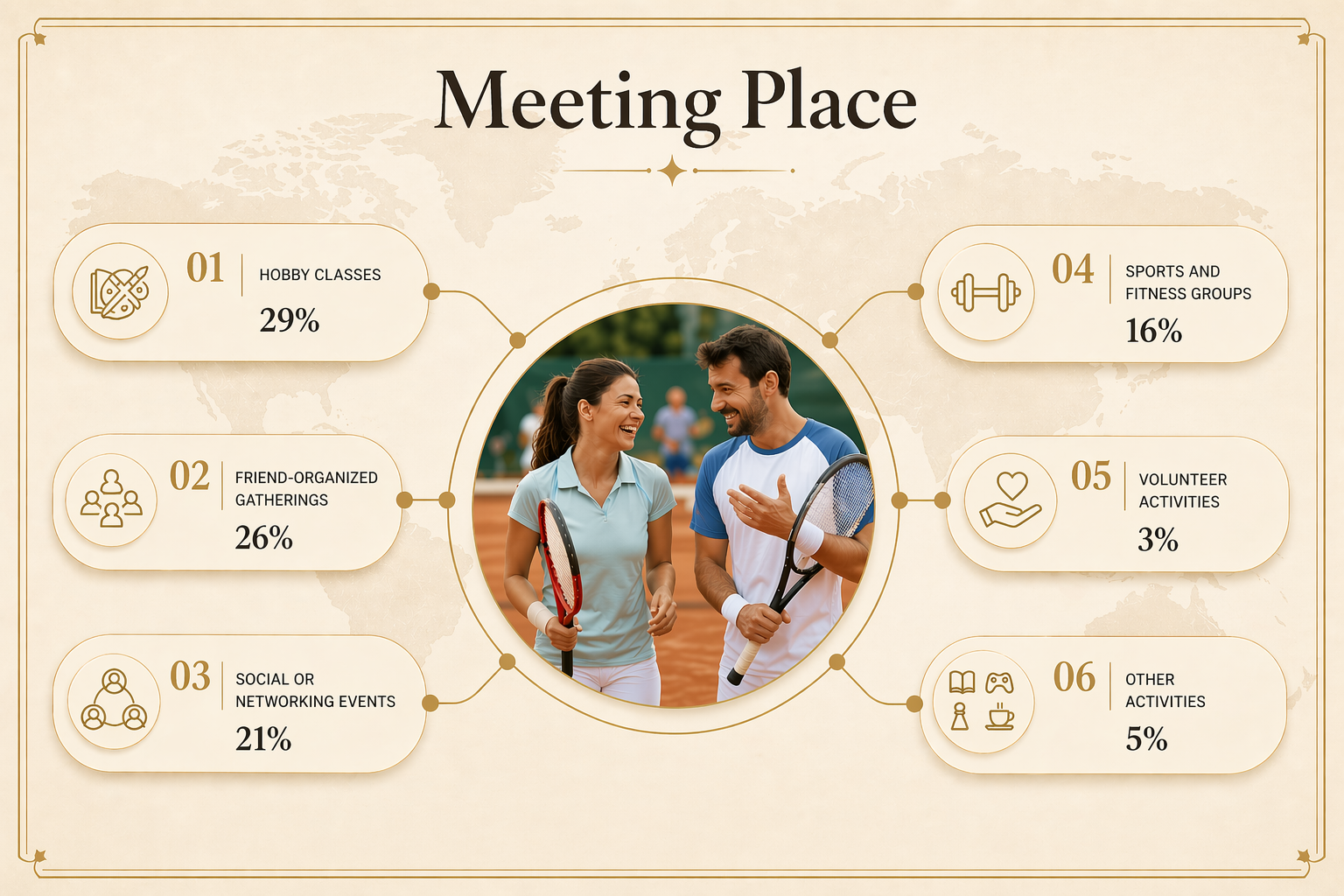
The Hybrid Approach Is Growing
Interestingly, the trend doesn’t necessarily mean abandoning technology entirely. Instead, many people are combining digital tools with real-world experiences. Some apps now organize in-person events, and communities focused on offline dating encourage structured meetups where singles can interact naturally.
This shift reflects a broader desire: moving from endless digital browsing to meaningful real-life encounters where chemistry, personality, and spontaneity can shine.
How to Start Offline Dating (Even If You’re Used to Apps)
If you’ve spent years relying on dating apps, meeting people offline can feel unfamiliar at first — but it doesn’t have to be complicated. In fact, many people are rediscovering how natural it can be to connect through everyday interactions. Stepping away from screens opens the door to more genuine conversations and clearer first impressions.
Here’s how to ease into offline dating, even if you’re used to swiping:
- Go to 1 event/week
- Talk to 3 new people
- Use hobbies as entry points
- Don’t aim for instant sparks
These small, consistent steps help build confidence and make meeting people feel more natural over time. Not every interaction needs to lead to something meaningful right away — what matters is showing up and staying open. Over time, these moments add up and create real opportunities for connection.
Understanding the "why" behind the offline trend is one thing; feeling the relief of it is another. After years of managing my own dating life like a second full-time job, I decided to outsource the search. I traded 300 swipes for one human expert to see if quality truly could replace quantity.
My Experience With a Matchmaking Agency: What Really Happens
Trying an offline dating agency felt a bit like stepping into a social experiment. After years of scrolling through profiles and crafting witty opening messages online, the idea of having real people introduce me to potential matches sounded both old-fashioned and surprisingly refreshing.
The First Step: A Real Conversation
Unlike apps where signing up takes about five minutes, joining a matchmaking service started with a detailed interview. Mine lasted almost 45 minutes, covering everything from hobbies and lifestyle to communication style and long-term goals.
Typical onboarding process in an offline dating service:
Compared with typical dating apps where profiles are built in under 10 minutes, the process felt slower — but also more thoughtful.
What the Meetings Were Actually Like
The introductions were simple: usually coffee or a casual walk. No endless texting beforehand, no pressure to craft perfect messages. The focus was just on conversation.
Some interesting numbers from my experience:
- 70% of clients prefer meeting within the first week of a match
- Average first meeting lasts about 45–55 minutes
- Around 1 in 4 introductions leads to a second date.
Those odds may seem modest, but they’re actually higher than typical conversion rates from app matches to real-life dates.
The Unexpected Benefits
Beyond meeting potential partners, the offline dating agency experience also offered something apps rarely provide: feedback. After each meeting, the matchmaker shared insights about compatibility and communication style. That feedback loop made the process feel less random and more intentional. Over time, it helped refine the types of introductions I received.
Insider Advice From a Traditional Matchmaker
When I spoke with a seasoned offline dating expert, I expected classic advice like “be yourself” or “dress well.” Instead, the insights were surprisingly data-driven. Professional matchmakers observe thousands of introductions every year, giving them a unique perspective on what actually works when people meet face-to-face.
According to matchmaking industry surveys, first impressions form faster than most people realize. The first few minutes often determine whether a conversation flows naturally.
In first meetings, several factors are commonly observed to influence a positive impression:
- Genuine eye contact builds connection and trust
- Natural conversation flow makes interactions feel easy
- Sense of humor supports emotional ease
- Body language signals confidence and openness
- Shared interests help establish common ground early
Interestingly, physical appearance alone rarely tops the list. Matchmakers consistently report that communication style and energy play a bigger role.
The 15-Minute Rule
One popular piece of insider advice is the “15-minute rule.” Many professionals claim that within the first 10–15 minutes, most people already sense whether they’d like to see someone again.
During a first meeting, interactions typically unfold in several natural stages over time:
- First minutes: visual impressions set the tone
- Early conversation: rhythm and flow begin
- Midpoint: compatibility signals emerge
- Later stage: deeper topics naturally appear
Because of this pattern, many curated events and matchmaking introductions are designed to last around 20–30 minutes — just enough time to detect genuine compatibility.
Common Mistakes Matchmakers See
After observing thousands of dates, professionals say certain habits appear again and again. The good news: they’re easy to fix.
Most common first-date mistakes:
- Treating the meeting like an interview
- Over-sharing too early
- Checking phones during conversation
These behaviors can unintentionally break the natural flow that makes real-life meetings enjoyable.
Why Offline Dating Still Works
According to many professionals, the reason people are rediscovering offline dating is simple: chemistry is easier to recognize in person. Tone of voice, humor timing, and body language create signals that no profile or message thread can fully capture.
As one matchmaker put it: when two people share the same space, the connection either grows naturally — or it doesn’t.
Offline Dating Services vs. Apps: Reclaiming the Human Element
For years, dating apps promised efficiency: thousands of potential matches, instant messaging, and smart algorithms. But efficiency doesn’t always translate to connection. Many singles are now rediscovering the appeal of offline dating, where conversations happen face-to-face and chemistry is easier to sense.
The Numbers Behind the Shift
Our recent survey shows a noticeable change in how people want to meet partners. While apps remain popular, satisfaction with purely digital experiences has started to decline.
The key difference isn’t technology — it’s human context. Meeting someone in person immediately adds tone, humor, and natural interaction that texting can’t replicate.
Why Apps Can Feel Mechanical
Dating platforms are designed for speed and scale. A single user may see 100–300 profiles in one session, which often leads to quick decisions based on photos alone.
Common Challenges in Modern App Dating
- Casual Engagement: Many users find themselves opening dating apps out of habit or boredom rather than a proactive desire to meet someone new.
- Split Attention: Swiping has become a background activity, with many people browsing while multitasking or distracted.
- Communication Fatigue: Digital conversations often lose momentum and stall shortly after the initial match.
This environment encourages rapid filtering rather than meaningful interaction.
What In-Person Services Do Differently
Traditional matchmaking agencies and curated social events operate on a very different principle: fewer introductions, but higher-quality ones. Instead of endless browsing, participants typically meet 5–10 carefully selected matches.
Dating apps typically offer access to hundreds of potential matches, where the first impression is based mainly on photos and a short bio. The interaction style is text-first, with conversations usually lasting around 10–15 messages. In contrast, offline dating services provide a smaller, more curated experience with about 5–10 introductions. Here, the first impression comes from real, in-person conversations, and the interaction is face-to-face, with discussions typically lasting 20–40 minutes.
Data can predict a match, but it cannot always predict a spark. This disconnect is exactly why "good on paper" so often feels "wrong in person." The secret lies in understanding your attraction archetype — it changes everything.

The Cost Reality Check: Why Intentionality Has a Price Tag
In the world of modern dating, there is a clear divide between "free-to-play" and "pay-to-find." While dating apps offer a low barrier to entry, the shift toward offline dating represents a transition from a mass-market approach to a premium, intentional one.
To choose the right path, it’s essential to look at the literal and figurative costs associated with both:
Comparing the Investment (2026 Averages)
The “Invisible” Cost of Free Apps
While a basic app profile is free, the “Time-Tax” is significant. According to 2026 industry reports, the average user spends over 250 hours a year swiping and managing ghosted conversations. For a busy professional, that is the equivalent of six full work weeks spent on a “digital second job” where performance reviews are often met with silence.
Why Offline Dating Costs More
The higher price point of offline services is a mechanical necessity. It covers:
- Vetting & Verification: Ensuring that every person in the room is who they say they are.
- Human Intelligence: Replacing a cold algorithm with a matchmaker’s intuition.
- Curated Environments: Securing high-end, private venues that reduce the stress of meeting strangers in a loud, public setting.
Price is often the ultimate filter. When you invest in a curated event or a matchmaking service, you aren't just paying for a date; you are paying to be in a room where every other person has the same level of commitment. High-intent dating requires a high-intent investment.
Navigating Modern In-Person Singles Events
Modern offline dating events have evolved to focus more on shared activities that help people relax and connect more naturally. When choosing between the two heavy hitters of the scene, here is how the numbers break down:
Speed Dating vs. Singles Mixers
Speed Dating: Fast but Surprisingly Effective
Speed dating remains one of the most structured and efficient ways to meet multiple people in a single evening. Participants typically rotate through short conversations lasting a few minutes each.
Typical speed dating format:
Despite the quick pace, the format works well because participants rely on immediate chemistry and intuition rather than prolonged messaging.
Some event companies report that:
- 45% of participants match with at least one person
- About 25% schedule a follow-up date
- Many attendees return to multiple events throughout the year
According to data shared by Wiley Online Library
Singles Mixers: The Social Approach
Unlike speed dating, singles mixers focus on open social interaction. These events often take place in lounges, cafés, or event spaces where participants mingle freely.
Typical mixer characteristics:
Mixers work particularly well for people who prefer low-pressure social environments where conversations happen organically rather than through timed rotations.
Other Creative Event Formats
Beyond speed dating and mixers, many organizers are experimenting with unique event concepts to make meeting people more engaging.
Different types of social events can create natural opportunities to meet people, often in smaller and more manageable group settings. Trivia or game nights usually bring together around 15–30 people and work well because playful competition makes starting conversations easier. Cooking classes tend to be more intimate, with about 10–20 participants, where collaboration helps build natural interaction. Outdoor meetups are typically smaller, around 8–16 people, offering a relaxed atmosphere that encourages longer, more comfortable conversations. Creative workshops, with roughly 10–18 attendees, foster connection through shared learning experiences.
These formats often blend socializing with activities, helping participants focus less on “dating” and more on having fun together.
What People Gain From These Events
Organizers of offline dating events report that participants value more than just romantic possibilities. Many participants exchange contact information with someone new, some go on to have at least one follow-up date, and many also expand their social circles and form new friendships.
Even when sparks don’t fly immediately, the experience often feels more authentic than interacting through screens.
In short: Offline gatherings replace algorithms with instant chemistry. Instead of interpreting texts, singles experience real personality, humor, and energy — the human element that digital dating often misses.
Methodology: How We Surveyed 1,030 Offline Daters
To understand how people experience dating beyond apps, we conducted a survey of 1,030 individuals who actively engage in offline dating. Participants were recruited through social events, community groups, and word-of-mouth referrals, ensuring a diverse mix of backgrounds and relationship goals.
Sample breakdown:
- Gender: 52% female, 46% male, 2% non-binary or preferred not to say
- Age groups: 25–34 (32%), 35–44 (29%), 45–54 (25%), 55+ (14%)
The survey was conducted over a four-week period and included a combination of multiple-choice and open-ended questions. Respondents were asked about where they meet potential partners, how they initiate conversations, what challenges they face, and how they evaluate connection and chemistry in real-life interactions.
To ensure data quality, responses were anonymized and screened for consistency. We excluded incomplete submissions and responses that showed signs of inattention or duplication.
While the findings provide meaningful insight into offline dating behaviors and attitudes, results are based on self-reported data and may reflect individual perceptions rather than measured outcomes.
Conclusion: The Future of Dating is Unplugged
After years of swipes, likes, and endless chats, many singles are rediscovering something refreshingly simple: meeting people in real life. The renewed interest in offline dating isn’t just nostalgia — it’s supported by growing trends and behavioral data showing that face-to-face interaction often leads to stronger first impressions.
The appeal of offline dating lies in the little things algorithms can’t measure — tone of voice, shared laughter, eye contact, and spontaneous chemistry. In fact, communication studies estimate that over half of emotional signals come from nonverbal cues, something screens simply can’t capture.
Anyway, the future of dating isn’t offline or online — it’s intentional. And that starts with showing up.
Noncommercial sharing of this article is permitted, provided you include full attribution and a link back to Last Matchmaker.